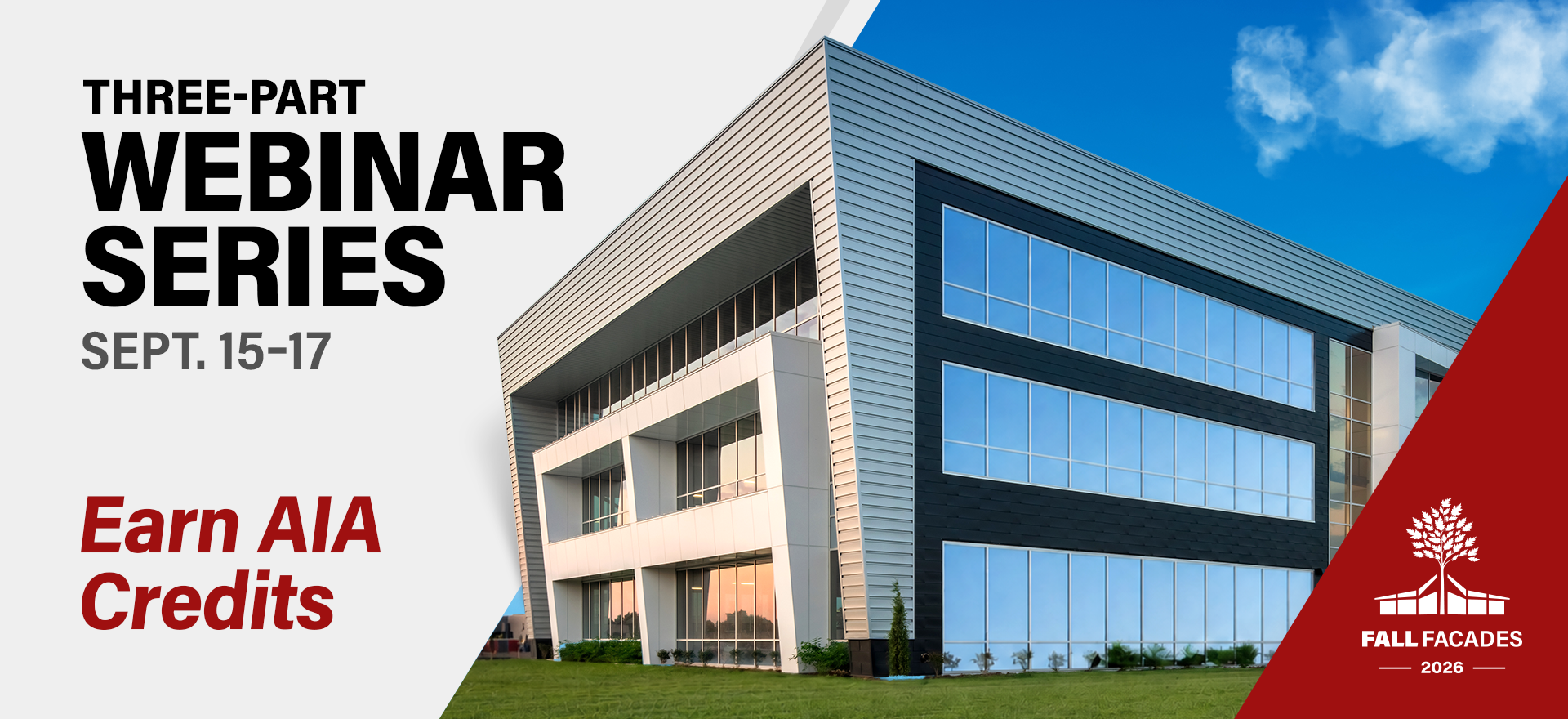
Design Across the Building Envelope.
Fall Facades 2026
Earn AIA Credits
From standing-seam roof design to metal wall panel detailing and MCM system selection, Fall Facades 2026 brings together three continuing education webinars focused on decisions that shape building-envelope performance.
Across the series, Citadel Architectural Products and Petersen will examine design considerations, installation realities, and system choices that influence performance and constructability.

Explore full course details and learning objectives below.
Mistakes to Avoid When Designing Metal Roof Systems
Tuesday, Sept. 15 | 2:00–3:00 PM ETBrandon Jackson Regional Group Manager - Southeast
Identify key factors that affect standing-seam metal roof system design, including slope, penetrations, flashings, transitions, and rooftop equipment. Real-world examples show how unresolved design and detailing conditions can create installation challenges, complicate field execution, and affect project costs.
Learn strategies for addressing these issues earlier, improving coordination, and aligning owner and design-team expectations with installation realities and budget.
Learning Objectives
- Identify potential problems such as slopes, penetrations, flashings, and transitions before the construction document phase begins.
- Analyze roof conditions such as curbs and HVAC equipment to determine if they can be relocated off a roof system.
- Examine real-world problems created when potential trouble areas are not identified and resolved during the design stage.
- Reconcile owner and design team expectations with field installation realities while remaining within budget.
The Art of Metal Wall Panels
Wednesday, Sept. 16 | 2:00–3:00 PM ETRobin Thompson Regional Group Manager - West/Mountain West
Examine exposed- and concealed-fastener metal wall panel profiles, applications, field-flashing details, and critical design requirements. Practical examples highlight common problem areas and show how panel selection, structural and wind-load requirements, installation, and flashing details influence sustainability, watertightness, and overall performance.
Learn how these considerations support metal wall panel systems that meet building-envelope performance requirements while achieving project design and aesthetic goals.
Learning Objectives
- Identify critical performance requirements and potential problem areas during the DD and CD stages.
- Examine the importance of incorporating the structural engineer-of-record wind loads with cladding and component negative loads early in the DD phase.
- Examine basic metal wall panel and sheet metal field flashing details and conditions (layouts) to design the proper installation of these flashing details during DD.
- Understand the importance of key basic details and layout of these field flashing details to provide the owner the desired watertight and aesthetically attractive completed metal wall panel system.
Presented by Citadel Architectural Products
Metal Composite Material (MCM):
Components, Systems, and Performance
Thursday, Sept. 17 | 2:00–3:00 PM ET
Sean Walker Product Manager - MCM/G&G
Explore metal composite material (MCM) and aluminum composite material (ACM) cladding systems, including panel components, manufacturing methods, attachment systems, and application conditions. Compare barrier and rainscreen approaches and field-assembled versus shop-fabricated systems to understand how these choices influence moisture management, fabrication, constructability, installation, and performance.
Gain a clearer basis for evaluating MCM and ACM systems against architectural, performance, and project requirements.
Learning Objectives
- Describe the primary components of MCM and how material and manufacturing differences influence panel performance.
- Compare common MCM applications and attachment systems, including barrier and rainscreen approaches.
- Explain key design, fabrication, and installation considerations for successful MCM wall system integration.
- Evaluate MCM products and systems based on project requirements, performance characteristics, and application conditions.